
Nobody asks us much about the surgery itself anymore. Most patients have already read up on the procedure by the time they’re in the room. What they actually want to know is recovery — what week two feels like, when they can drive again, when stairs stop being an event.
So here’s a realistic week-by-week picture. Every recovery is different, and your surgical team will give you specifics for your case — but this is the general shape of it.
Days 1 to 3: hospital stay
Most patients are up and taking a few assisted steps within 24 hours of surgery — earlier mobilisation is one of the actual benefits of a pre-planned, precisely-aligned procedure. Pain is managed actively during this window. Physiotherapy starts almost immediately, usually the same day or the next morning, focused on gentle movement rather than pushing hard.
This part surprises people the most. There’s an old idea that you’re meant to lie still after knee surgery. That’s outdated. Movement, carefully guided, is what actually speeds things up.
Week 1 to 2: home, with a walker
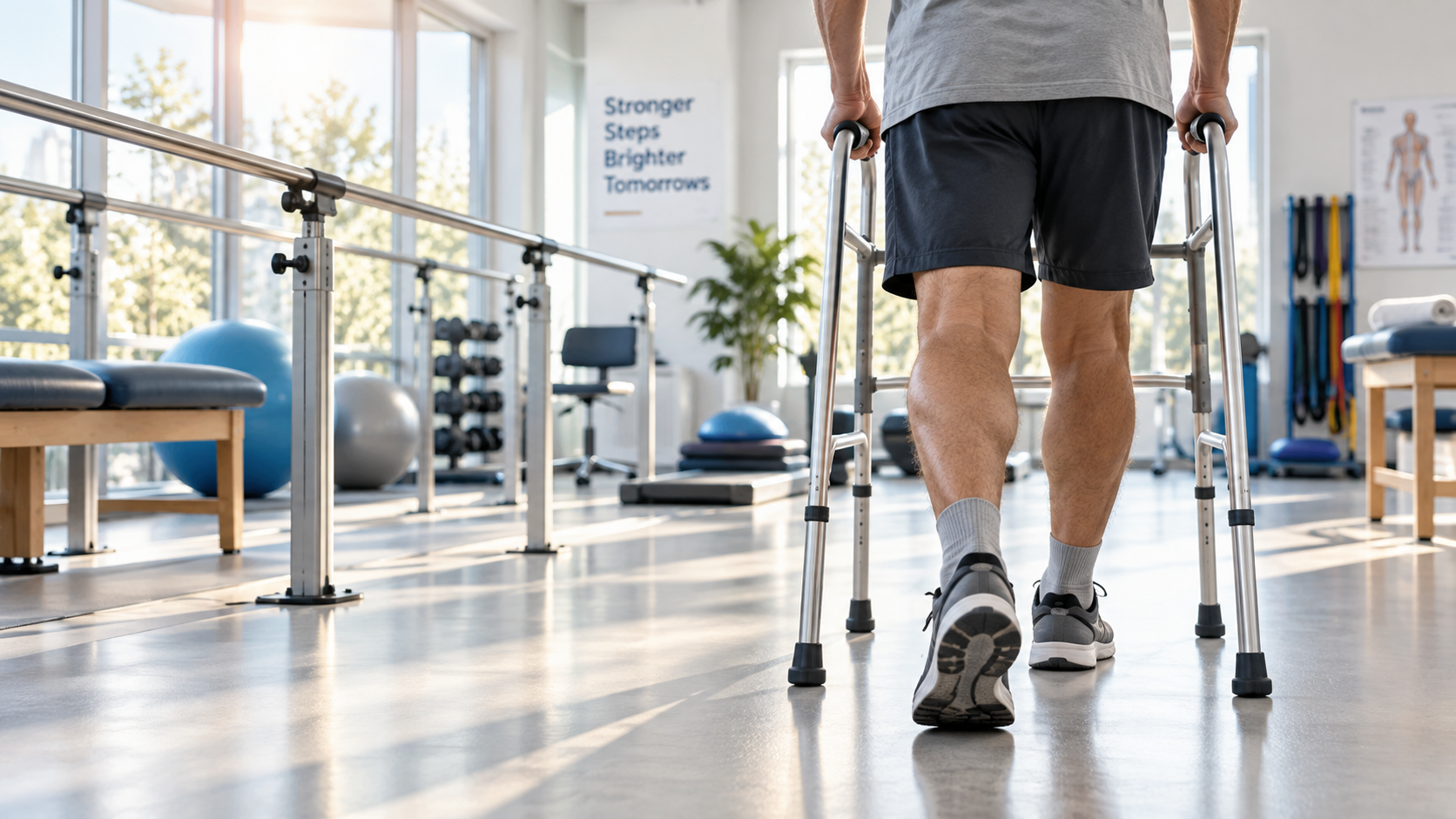
You’ll go home with a walker or crutches and a clear exercise routine — not optional homework, the actual engine of recovery. Swelling is at its worst here. Ice, elevation, and doing the prescribed exercises even when you don’t feel like it matters more in this window than at any other point.
Sleep gets disrupted. That’s normal and it passes.
Week 3 to 4: walking further, less support
By this stage most patients have moved from a walker to a cane, or are walking short distances unaided indoors. Bending the knee gets easier — a lot of the early stiffness starts to lift. Return to light desk work often happens around here, depending on the job and how the recovery is tracking.
Week 5 to 6: the turning point
This is usually when it starts to feel like progress instead of recovery. Stairs get manageable. Short walks outside become normal again. Many patients are cleared to drive around this point, once reaction time and knee control are confirmed safe — that’s a decision your surgeon makes with you, not a fixed date on a calendar.
Recovery isn’t a straight line. Some days feel like a setback. That’s part of the process, not a sign something’s wrong.
Beyond six weeks
Full recovery, including return to more demanding activity, typically continues for three to six months, with strength and endurance still improving well past that. Most patients report the knee starting to feel genuinely “theirs” again somewhere around the three-month mark — not perfect, but no longer something they’re managing every hour of the day.
The precision that comes from planning the surgery in 3D before you’re ever on the table — correct implant sizing, correct alignment — tends to show up here more than anywhere else. A well-aligned knee simply has less to compensate for.
If you’re preparing for knee replacement and want a realistic sense of what your own recovery timeline might look like, that’s worth discussing directly at your pre-surgical consultation, where your specific case, activity level, and general health all factor in.